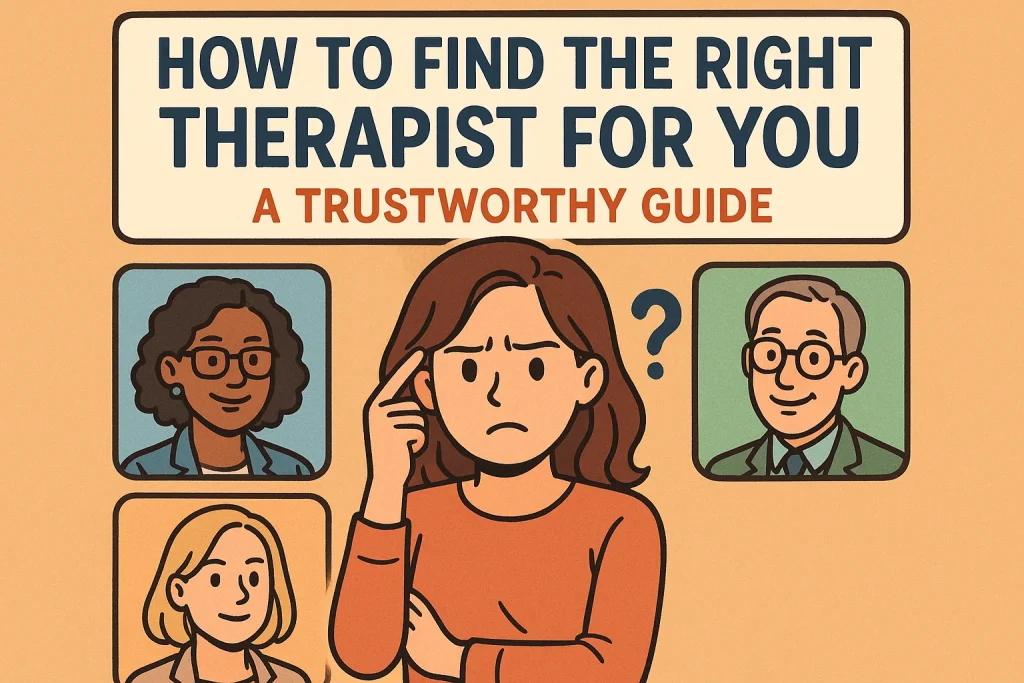
Finding the right therapist is an essential step for anyone seeking mental health support, personal growth, or healing from trauma. Whether you’re facing anxiety, depression, relationship struggles, or just feeling stuck, choosing a therapist you trust can dramatically improve your journey. With so much information—and misinformation—online, this guide is grounded in real facts, verified data, and ethical practices to help you make a decision that puts your well-being first.
The Real Key to Choosing a Therapist
- Therapist credentials and experience matter—don’t be afraid to ask for proof
- Chemistry and trust between you and your therapist are crucial
- Evidence-based methods show better long-term outcomes
- Beware of “too good to be true” marketing or quick fixes
Why Therapist Fit Matters
Therapy is Not One-Size-Fits-All
Everyone’s situation and personality are different, so a “good therapist” for one person might not work for another. Evidence shows that therapy success is strongly linked to the *relationship*—called the therapeutic alliance—between client and therapist, sometimes even more than the method used.
The Cost of Choosing Wrong
A poor match can not only waste money (the average session in the US now costs $100–$250, and in the UK £60–£150), but also delay healing or, in the worst cases, create further distress. Research from the American Psychological Association confirms that switching therapists is common—about 40% of clients do it at least once, often because of poor fit.
Red Flags to Watch Out For
Be alert to therapists who:
- Guarantee rapid results (“I can fix your anxiety in 3 sessions!”)
- Push expensive programs or upsell “extra” treatments
- Refuse to show their credentials, or seem vague about training
- Don’t listen or rush you through your story
Your safety comes first. Trust your gut—if something feels off, you are never obligated to stay.
What Makes a Good Therapist?
Check Their Credentials
Therapists may be psychologists (PhD/PsyD), licensed clinical social workers (LCSW), counselors (LPC, LMHC), or psychiatrists (MD/DO). Always verify:
- They are licensed to practice in your state/country
- No record of ethical violations or disciplinary actions
- Specialized training in your area of concern (ex: trauma, addiction, couples therapy)
Use official registries (like Psychology Today, BACP, or your state’s licensing board) for verification.
Evidence-Based Practice Is Essential
Look for therapists who use methods supported by research: Cognitive Behavioral Therapy (CBT), Acceptance and Commitment Therapy (ACT), EMDR, DBT, etc. Be wary of those who rely only on “miracle” methods or can’t explain their approach in clear, simple language.
Experience With Your Specific Issue
If you’re dealing with something sensitive—PTSD, eating disorders, childhood trauma—choose a therapist who has substantial experience (minimum 3–5 years) working with people like you. Ask about success stories, but remember: all real therapists know there are no guarantees in mental health.
| Type | Training | Can Prescribe? | Avg. Cost (US) |
|---|---|---|---|
| Psychologist | PhD or PsyD, 7-10 yrs | No | $120–$250 |
| Psychiatrist | MD/DO, 10+ yrs | Yes | $200–$400 |
| Counselor/Therapist | MA/MS, 3–5 yrs | No | $80–$180 |
| Social Worker (LCSW) | MSW, 2–4 yrs | No | $90–$160 |
Credentials and method are only part of the equation. The rest is about the *human* connection—something you can’t see on paper.
How to Build Trust in Therapy
Ask the Right Questions
You have the right to “interview” your therapist. Sample questions:
- “What’s your experience working with people in my situation?”
- “How do you measure progress?”
- “What are your confidentiality policies?”
- “What approach would you use, and why?”
Honest, direct answers are a sign of professionalism.
First Impressions Matter
Research shows most clients decide within 2–3 sessions if a therapist is a good fit. Trust your feelings. If you feel unsafe, judged, or not listened to, you’re allowed to try someone else—no explanation required.
Boundaries and Professionalism
A trustworthy therapist never:
- Over-shares personal problems
- Pushes their own values or religion
- Initiates any relationship outside therapy
Professional ethics are non-negotiable. You deserve respect at all times.
In-Person or Online Therapy?
Accessibility & Convenience
Online therapy platforms like BetterHelp, Talkspace, and others offer flexible scheduling and access from anywhere. This can be life-changing for people in rural areas or with busy schedules. However, privacy and data security should be checked—always read reviews and privacy policies.
Therapeutic Connection: Is It the Same?
Studies (APA, 2024) indicate online therapy is about as effective as in-person therapy for most common issues like anxiety, mild depression, and stress. For severe mental health concerns or trauma, in-person therapy may provide greater safety and deeper connection.
Cost Differences & Insurance
Online therapy can be $50–$100 per session (as of 2025), while in-person often ranges from $90–$200. Always check if your insurance covers mental health services, as coverage can save you hundreds of dollars per year.
Exploring Therapy Options
Types of Therapy Approaches
Understanding the style of therapy is just as important as choosing the right professional. Common evidence-based approaches include:
- Cognitive Behavioral Therapy (CBT): Focuses on changing patterns of thinking and behavior. Widely supported by research for anxiety and depression.
- Dialectical Behavior Therapy (DBT): Effective for emotional regulation, especially with borderline personality disorder.
- EMDR (Eye Movement Desensitization and Reprocessing): Often used for trauma and PTSD. Backed by multiple clinical studies.
- Psychodynamic Therapy: Explores unconscious patterns shaped by past experiences. Can be helpful for complex or deep-rooted issues.
Therapists may blend styles or offer specialty treatments—don’t hesitate to ask for specifics.
What Real Clients Say
Honest reviews can reveal a lot. Verified review platforms (such as Google, Healthgrades, or professional directories) often highlight themes like:
- Feeling genuinely heard and respected
- Progress tracked in measurable ways
- Clear explanations of treatment plans
- Transparency about costs and policies
Red flag reviews include complaints about missed appointments, unclear billing, or a therapist who talks more about themselves than the client.
Costs, Insurance, and Value
Therapy is an investment in your well-being. As of 2025, average costs per session:
- In-person: $90–$250 (US), £60–£150 (UK), varies globally
- Online: $50–$120 per session, often with monthly plans available
Check if your insurance covers therapy—many now do after pandemic-era reforms. Some therapists offer sliding scale fees based on income.
| Aspect | In-Person | Online |
|---|---|---|
| Accessibility | Local only, may require travel | Anywhere, often 24/7 |
| Privacy | Clinic or office setting | Home or any private space |
| Cost | $90–$250/session | $50–$120/session |
| Effectiveness | Ideal for complex/trauma cases | Good for mild to moderate issues |
Both options have strengths; the best choice depends on your personal needs, location, and comfort with technology.
Checklist: Before Booking Your First Session
- Verify licenses and credentials via official boards
- Ask about experience with your specific concerns
- Check for clear, upfront pricing—no hidden costs
- Trust your comfort level after the first call or session
Frequently Asked Questions (FAQ)
Q1. What qualifications should a therapist have?
A reputable therapist should be licensed in your country/state, have accredited training, and no record of serious ethical violations.
Q2. Can I switch therapists if I don’t feel comfortable?
Absolutely. You are never obligated to stay with a therapist if the fit isn’t right—most people try more than one before finding a match.
Q3. How much does therapy cost in 2025?
In the US, average costs are $90–$250 for in-person and $50–$120 for online sessions. Prices vary by country and therapist’s experience.
Q4. Is online therapy as effective as in-person?
For common issues like stress and anxiety, studies show online therapy is similarly effective. For severe trauma, in-person may be better.
Q5. How do I know if a therapist is right for me?
You should feel safe, respected, and heard. Trust your instincts—comfort and rapport are key.
Q6. What’s the difference between a therapist, counselor, and psychologist?
Psychologists hold PhDs/PsyDs and can conduct assessments; therapists/counselors hold master’s degrees and focus on talk therapy.
Q7. Will my information stay confidential?
Licensed therapists are bound by confidentiality, except in cases of immediate harm or legal exceptions. Ask about their policy.
Q8. How long does therapy usually last?
Many short-term therapies run 8–20 sessions, but some clients choose long-term support. Duration depends on your goals.
Q9. What if I can’t afford therapy?
Look for therapists offering sliding scales, or community mental health clinics. Some employee benefit programs also provide free sessions.
Q10. Do I need a diagnosis to see a therapist?
No. Anyone can seek therapy for any concern, big or small—no formal diagnosis needed.
Q11. Can I request a male or female therapist?
Yes. Most clinics will try to match your gender preference if you request it.
Q12. What questions should I ask in the first session?
Ask about their experience, approach, confidentiality, and how progress is measured. Prepare questions in advance.
Q13. Are all therapy sessions in-person?
No. Many therapists offer online, phone, or hybrid models to suit various needs and comfort levels.
Q14. What are red flags in therapy?
Overpromising results, vague credentials, inappropriate self-disclosure, or boundary violations are warning signs.
Q15. How do I find culturally competent therapists?
Search for therapists with training or lived experience relevant to your background. Some directories allow for these filters.
Q16. Can therapy help with relationship issues?
Absolutely. Many therapists specialize in couples or family counseling to address relationship challenges.
Q17. What if I don’t click with my therapist?
It’s normal. Try a few sessions, but don’t hesitate to change if it doesn’t feel right.
Q18. How do I verify a therapist’s license?
Use official state/professional board websites. Don’t rely solely on therapist websites.
Q19. Is group therapy effective?
Group therapy can be powerful, especially for support and social skills. Look for well-run, professionally facilitated groups.
Q20. Can therapy be harmful?
Rarely, but unethical or poorly trained therapists can do harm. Trust your instincts and report any serious concerns.
Q21. Will my insurance cover therapy?
Many insurance plans in 2025 cover mental health. Check with your provider for details on coverage, limits, and co-pays.
Q22. How often should I attend therapy?
Weekly is common at first; frequency can be adjusted based on your needs and goals.
Q23. What are evidence-based therapies?
CBT, DBT, ACT, and EMDR are examples of therapies supported by research and clinical trials.
Q24. Can I get therapy for work stress?
Yes, workplace stress is one of the top reasons people seek therapy in 2025.
Q25. Do therapists prescribe medication?
Only psychiatrists (MD/DO) and some nurse practitioners can prescribe; most therapists focus on talk therapy only.
Q26. How do I start therapy if I have social anxiety?
Online therapy or messaging-based sessions can be a gentle way to begin if in-person feels intimidating.
Q27. What’s the first session like?
Usually, it’s an intake: sharing your story, discussing goals, and learning about confidentiality and structure.
Q28. Can therapy help with grief or loss?
Yes, many therapists have specific training in grief counseling and can help navigate loss in a healthy way.
Q29. Are therapy apps effective?
Apps can support mental health but usually aren’t substitutes for professional care. Use as an adjunct, not a replacement.
Q30. Is everything I say really private?
With rare legal exceptions (danger to self/others), what you share is confidential. Feel free to ask for specifics.
공식 자료와 확인처
- 금융감독원 fss.or.kr
- 손해보험협회 공시실 knia.or.kr
- 생명보험협회 공시실 klia.or.kr
보장 내용은 상품과 가입 시점의 약관에 따라 달라집니다. 실제 조건은 가입하신 보험사의 약관 원문에서 확인하세요.
Counseling 관련해 이어서 볼 글
응급하거나 자해·타해 위험이 있는 경우 즉시 119 또는 가까운 응급의료기관에 도움을 요청하세요. 제도와 지침은 변경될 수 있으므로 관계기관의 최신 안내를 함께 확인하시기 바랍니다.