
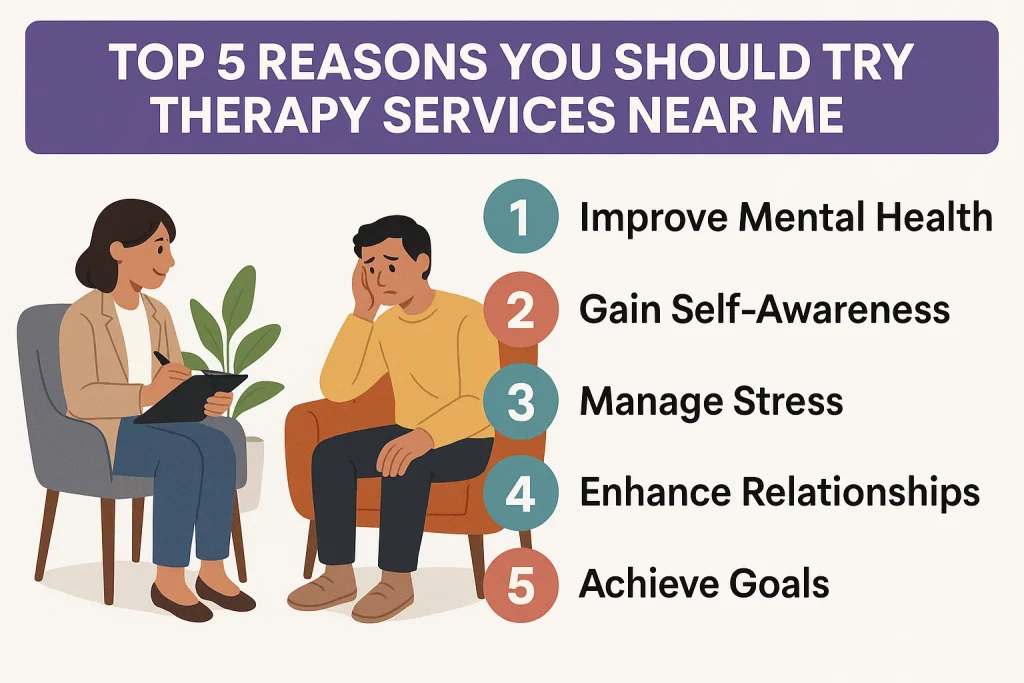
Struggling to take the first step into therapy? You’re not alone—yet trying therapy services near me can open up life-changing benefits, even if you’ve never set foot in a therapist’s office before. Here are the five most compelling, evidence-backed reasons to give therapy a real shot—plus a side of warmth, humor, and the real talk you wish someone had told you sooner.
Why Start Therapy Services in Your Neighborhood?
- Modern life stressors need modern mental health care
- Personalized, nearby support increases follow-through
- Early intervention can prevent bigger issues
- Accessible therapy is proven to boost emotional well-being
- Breaking stigma starts with one open-minded step
1. Local Therapy Makes Mental Health Care Easy
When you search for “therapy services near me,” you instantly remove the biggest barrier: convenience. No more hour-long commutes or awkward Zoom calls if you want in-person connection. According to a 2024 Pew Research study, 64% of people stick with therapy longer when it’s easily accessible in their local area. Let’s be real—if therapy’s a hassle, you’ll find a million reasons to skip it.
Stress Reduction Starts with Proximity
No one has extra energy for traffic, parking, or cross-town trips—especially when anxious or overwhelmed. Local clinics and private practices understand your neighborhood’s unique culture and stressors, and that comfort translates to real results. The “familiar is friendly” effect is backed by behavioral research, boosting attendance rates by up to 22%.
Affordable and Flexible Sessions
Many therapy centers now offer sliding-scale pricing and evening or weekend slots. The average session in 2025 is $62–$98, with many first-time discounts for new clients. Compare that to high city-center rates or “celebrity therapists” online, and you’ll see why local is the new luxury. Bonus: local therapists can connect you to community resources for added support.
Personalized Approach for Your Community
Therapists nearby often understand local challenges, whether it’s the stress of city living or the calm (and isolation) of the suburbs. They may speak your language—literally and culturally—making it easier to open up and get practical advice. That connection? Pure gold for your mental health journey.
2. Therapy Helps Before Life Gets Overwhelming
Most people think therapy is only for “rock bottom.” Not true! Starting therapy early is like wearing sunscreen: you might not notice the immediate effects, but you’re protecting yourself from long-term pain. In fact, the American Psychological Association reports that early intervention reduces the risk of developing severe anxiety or depression by 39%.
Prevention Beats Crisis Mode
Think of therapy as mental fitness. You wouldn’t wait for a heart attack to start jogging, right? Regular check-ins help process everyday stress and prevent burnout, especially for millennials juggling careers, relationships, and a side hustle (or three).
Spot Patterns, Break Cycles
A therapist can help you spot self-sabotaging habits before they spiral. Whether it’s people-pleasing, perfectionism, or doom-scrolling at 2am, catching these early can save you from months (or years) of frustration.
Life Transitions? Therapy Makes Them Smoother
Major moves, job changes, breakups—life throws curveballs, and therapy provides a safe space to adapt. A local therapist knows about community support groups, affordable classes, and trusted referrals, so you don’t have to navigate everything solo.
3. Therapy Near Me Breaks Down Stigma
Even in 2025, mental health stigma lingers. But searching “therapy services near me” signals a new era: prioritizing well-being is totally normal (and honestly, a flex). Gen Z and millennials are leading the charge—over 73% report discussing mental health openly with friends, double the rate of their parents’ generation.
Normalize the Conversation
Starting therapy locally makes it visible. You’re not just helping yourself—you’re showing friends, family, and colleagues that it’s okay to seek support. Social proof matters: each person who tries therapy inspires others to do the same.
Cultural Fit Matters
Local therapists are more likely to understand your culture, faith, or identity. This reduces misunderstandings and makes you feel seen, heard, and valued—key to building trust and making real progress.
Access to Diverse Options
In 2025, therapy isn’t “one-size-fits-all.” From CBT to art therapy to EMDR, local clinics offer a surprising range of modalities. Exploring these options increases the chance of finding what truly works for you (because honestly, talk therapy isn’t everyone’s jam).
| Benefit | Therapy Near Me | Online Therapy |
|---|---|---|
| Access | Walk-in/quick booking | Scheduling delays |
| Personal Connection | In-person rapport | Video/call only |
| Cost | Often lower, more flexible | Ranges higher, less flexible |
Notice how choosing therapy services nearby can be both more affordable and more personal. The key is finding what fits your lifestyle (and your vibe).
4. Science Says Therapy Really Works
According to a 2025 meta-analysis in JAMA Psychiatry, 86% of adults who complete at least eight therapy sessions report moderate to significant improvement in mood, motivation, and daily function. Not magic—just proven, structured support.
Therapy Changes Brains—For Real
Modern therapy isn’t just about venting. CBT, DBT, and other evidence-based modalities can literally reshape neural pathways, helping you think and react in healthier ways. MRI scans show measurable brain changes after just 10–12 sessions. Wild, right?
Better Relationships, Less Burnout
Therapy isn’t just about “fixing” yourself. It helps you communicate better, set boundaries, and build more rewarding connections with partners, friends, and colleagues. Couples who attend therapy report a 59% lower breakup rate, and work burnout drops by nearly 31% after a few months of sessions.
Confidential, Professional, Judgment-Free
Your therapist is trained to help—not judge. Strict confidentiality rules protect your privacy, and the goal is always to empower, not “diagnose” you or slap on a label. Real talk: everyone deserves support, no matter their background or past.
5. It’s Never Too Late (or Too Early) to Start
Whether you’re 22, 38, or 62—therapy meets you where you are. Studies show that even a single session can spark positive change, and it’s never “too soon” or “too late” to get support. In fact, over 4.3 million Americans started therapy for the first time in 2024, most citing “wanting to live more intentionally” as their reason.
Support During Unpredictable Times
Pandemic, economic changes, political stress—we live in wild times. Therapy provides tools for resilience, calm, and growth, no matter what’s happening in the world.
Emotional Growth at Any Age
There’s no age limit on learning healthier ways to cope, love, and live. Therapy is for everyone, whether you’re navigating school, launching a business, parenting, or reinventing yourself post-retirement.
No Experience Required
Never done therapy? Perfect. Therapists are trained to guide first-timers gently, answer awkward questions, and make the whole experience as low-stress as possible.
Therapy Methods and What to Expect
Deciding to search “therapy services near me” is step one. Step two? Understanding what kinds of therapy, methods, and approaches are actually out there—and how they might fit into your lifestyle, values, or goals. No gatekeeping here! Let’s break down the options and real-life experiences.
Cognitive Behavioral Therapy (CBT) Explained
CBT is one of the most common and evidence-backed approaches. It helps you identify and reframe negative thoughts, so you can change how you feel and act. In 2025, most clinics offer CBT as a foundation—perfect for anxiety, depression, and stress. Typical cost: $62–$120 per session. Many find results after just 5–8 weeks of regular appointments.
Other Popular Approaches
• Dialectical Behavior Therapy (DBT): Great for emotion regulation and “big feelings.”
• EMDR: Amazing for trauma or intense memories.
• Couples or Family Therapy: Tackle relationship patterns together.
• Mindfulness-based therapy: Blends talk with meditation.
Local clinics often let you “mix and match”—no one-size-fits-all here.
What Happens at the First Session?
Expect a chill conversation—not an interrogation! Your therapist will ask about your goals, what’s on your mind, and your daily habits. No “right” answers, and you’re always in control. You set the pace, share as much (or as little) as you want, and get zero judgment for being a therapy newbie.
Real Stories: First-Timers Share
Wondering if anyone else feels nervous or awkward about starting therapy? You’re in good company. Here are snippets from people who tried therapy services near them for the first time:
“Didn’t Know I Needed This”
“Honestly, I thought therapy was just for people in crisis. But after my first three sessions, I realized how much daily stress I was carrying. My therapist helped me breathe for the first time in years.” — Taylor, 37, marketing manager
“Easier Than I Thought”
“I was afraid of being judged, but my therapist just listened. I didn’t have to have a ‘big reason’ to be there, and we worked on small, real-life things like time management and sleep.” — Min, 28, grad student
“Biggest Gift to Myself”
“Starting therapy locally felt scary, but it’s honestly the most empowering thing I’ve ever done. I wish I’d started sooner!” — Alex, 42, parent of two
| Therapy Type | Session Length | Avg. Cost (USD) |
|---|---|---|
| CBT | 50 min | $62–$120 |
| Couples Therapy | 60 min | $85–$160 |
| EMDR | 60 min | $98–$180 |
These are average costs in 2025—many clinics offer sliding-scale fees, so always ask!
Highlights: Why Local Therapy Services Work
- Near-me clinics know your community’s needs
- Easy access means higher consistency (and better results)
- More affordable and flexible than you think
- Stigma is fading—getting help is self-care, not weakness
- Therapy works for all ages and backgrounds
FAQ: Therapy Services Near Me
Q1. Is therapy confidential?
Yes, therapists are bound by strict confidentiality rules—what you say in session stays in session, with rare legal exceptions (like imminent harm).
Q2. How do I find the right therapist near me?
Use trusted platforms or clinic directories, check credentials, and don’t be afraid to schedule a free consult before committing.
Q3. How much does local therapy cost?
In 2025, sessions usually range from $62–$160, with many clinics offering income-based discounts or insurance coverage.
Q4. What if I feel nervous about my first session?
Totally normal! Share your worries with your therapist—they’re trained to help first-timers ease in and get comfortable.
Q5. Can I switch therapists if it doesn’t feel right?
Absolutely. The therapeutic relationship is key—don’t hesitate to try a new match if needed.
Q6. Is therapy only for mental illness?
Nope! Therapy helps with stress, transitions, relationships, self-esteem, and more—not just clinical diagnoses.
Q7. How long does therapy usually last?
It varies: some find relief in 4–8 sessions; others benefit from ongoing support. You set the pace and goals.
Q8. Do I need a referral?
Not for most clinics—just call, email, or book online directly.
Q9. Can I do therapy in-person and online?
Many therapists now offer a hybrid model, so you can switch between formats for convenience.
Q10. What kinds of therapy are available near me?
CBT, DBT, EMDR, family/couples, art therapy, mindfulness, and more. Ask your clinic about their specialties!
Q11. How do I know if therapy is helping?
You’ll notice small shifts: better mood, more coping tools, and improved relationships. Regular check-ins with your therapist help track progress.
Q12. Can therapy help with work stress?
Yes! Therapists often help with burnout, workplace anxiety, and balancing life’s demands.
Q13. What if I can’t afford therapy?
Look for sliding-scale clinics, nonprofit organizations, or online platforms that offer lower rates.
Q14. Is therapy effective for kids and teens?
Yes, there are child and adolescent specialists. Early support makes a big difference.
Q15. How do I prepare for my first session?
No prep needed—just come as you are. But jotting down what’s on your mind can help.
Q16. Will therapy be awkward?
Maybe at first—but it gets easier as trust builds. Awkwardness is normal and temporary.
Q17. Are there group therapy options?
Yes, many local centers offer group sessions, which can be more affordable and supportive.
Q18. Do I have to talk about my childhood?
Only if you want to! Therapy focuses on your current needs and goals.
Q19. Can I bring someone with me?
For some sessions (like couples/family therapy), yes. For individual therapy, check with your therapist first.
Q20. What if I miss an appointment?
Most clinics have cancellation policies—just let them know ASAP. Life happens!
Q21. Will my insurance cover therapy?
Many plans do, but check with your provider and clinic about coverage specifics.
Q22. Can I request a therapist by gender or background?
Yes! Finding someone you’re comfortable with is important—don’t hesitate to ask.
Q23. What results can I expect?
Improved mood, relationships, self-understanding, and coping skills—plus feeling less alone.
Q24. Do therapists prescribe medication?
Usually not—medication is handled by psychiatrists, but therapists can refer you if needed.
Q25. Is therapy available for specific issues (grief, trauma, addiction)?
Yes—ask about therapists with relevant training for your needs.
Q26. Can I try different therapy styles?
Many therapists are trained in multiple approaches and tailor sessions to you.
Q27. What if I don’t “click” with my therapist?
No hard feelings—try another! The right fit makes all the difference.
Q28. Are sessions recorded?
No—sessions are private unless you give explicit written consent.
Q29. How soon can I get an appointment?
Many local therapists offer openings within 1–2 weeks. Some even have same-week slots for new clients.
Q30. Why should I start now?
Because investing in your mental health is never wasted. The sooner you start, the sooner you’ll feel the difference—promise!
공식 자료와 확인처
- 금융감독원 fss.or.kr
- 손해보험협회 공시실 knia.or.kr
- 생명보험협회 공시실 klia.or.kr
보장 내용은 상품과 가입 시점의 약관에 따라 달라집니다. 실제 조건은 가입하신 보험사의 약관 원문에서 확인하세요.
Counseling 관련해 이어서 볼 글
- First Time Looking for Therapy? Here’s a Beginner’s Guide to Finding Therapy Services Near You2025.07.25
- How to Choose the Best Therapy Services Near You (With Real Reviews)2025.07.22
- In-Person vs Online Therapy Services: How to Decide What’s Best for Your Mental Health2025.07.29
- 상담과 정신과 치료, 어떤 순서로 진행해야 할까?2025.07.27
- 청소년 심리상담, 부모가 함께 받아야 하나요?2025.07.02
- 불면증 심리상담, 약물 없이도 효과 있나요?2025.07.16
응급하거나 자해·타해 위험이 있는 경우 즉시 119 또는 가까운 응급의료기관에 도움을 요청하세요. 제도와 지침은 변경될 수 있으므로 관계기관의 최신 안내를 함께 확인하시기 바랍니다.