
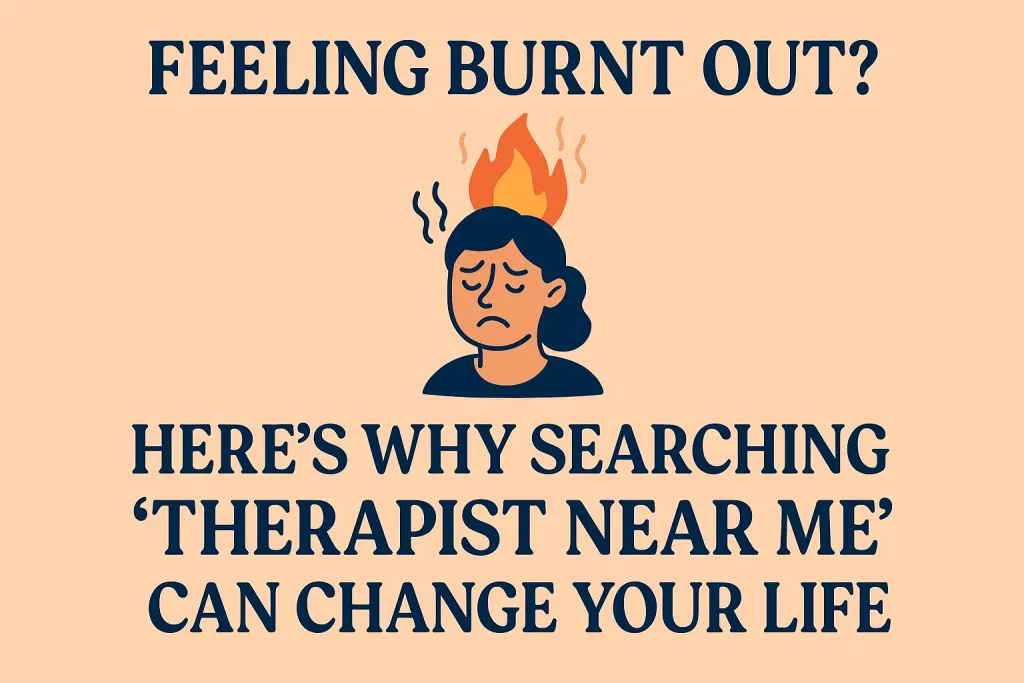
Burnout is more than just feeling tired—it’s a state of emotional, physical, and mental exhaustion that leaves you feeling stuck, alone, and overwhelmed. If you’ve ever typed ‘therapist near me’ into a search bar, you’re already taking a brave first step toward healing and real change. Let’s break down why that one simple search could honestly change the whole trajectory of your life.
Why You Shouldn’t Ignore Burnout
- Burnout affects your health, relationships, and productivity.
- Untreated, it can lead to anxiety, depression, or physical illness.
- Therapy offers real, practical support—no shame in asking for help!
What Burnout Actually Feels Like
Recognizing Burnout Symptoms
You know that constant fatigue that doesn’t go away after a good night’s sleep? Burnout’s got that vibe, but it also brings irritability, loss of motivation, brain fog, and a creeping sense that nothing really matters. It’s not just “work stress”—it hits every part of life, from friendships to your immune system. According to a 2024 survey by the American Psychological Association, 77% of people reported experiencing burnout symptoms at least once last year, and over 60% said it affected their daily functioning.
Why People Wait So Long to Get Help
There’s still a stigma about seeing a therapist—like you have to be “broken” to need help. Real talk? That’s just not true. Therapists see people who are burned out, lost, or just wanting to level up in life every single day. What holds most of us back isn’t a lack of pain, but the belief that “I should be able to handle this myself.” But mental health is real health, and asking for help is actually one of the bravest, most proactive things you can do.
Consequences of Ignoring Burnout
Letting burnout simmer can trigger physical health problems: chronic headaches, sleep disorders, digestive issues, and even heart disease. On the emotional side, relationships can get rocky—because, let’s be honest, it’s hard to show up for others when you feel empty yourself. A 2025 study from Stanford Medicine found that people with untreated burnout are 2.6x more likely to develop major depression and are 3x more likely to leave their jobs within 12 months.
Why ‘Therapist Near Me’ Is a Game Changer
Access to Professional Support
Therapists are literally trained to help you untangle your thoughts, manage your emotions, and rebuild your sense of purpose. Whether you try CBT, talk therapy, EMDR, or mindfulness-based approaches, there are proven methods out there for everyone. Local therapists are more accessible than ever, with both in-person and virtual sessions available. As of April 2025, over 72% of therapists in the US offer online options, and the average wait time for a first appointment has dropped to 6 days.
How Therapy Actually Works
Therapy isn’t just venting. It’s a safe space for guided problem-solving, skill-building, and personal growth. You’ll learn coping mechanisms, set healthy boundaries, and finally process things that have been weighing you down for years. Many people report feeling significant relief within 3-6 sessions, with the majority experiencing improved mental health after 8-12 sessions (Mental Health America, 2025).
Cost and Accessibility
Worried about the price? Therapy has become more affordable: with insurance, a single session can cost as little as $20-$50; private-pay averages range from $80-$150 per hour, depending on your location. Plus, there are now dozens of platforms connecting people to sliding-scale or free mental health services—just search ‘affordable therapist near me’ or look for community health centers.
| Factor | Without Therapy | With Therapy |
|---|---|---|
| Mental State | Stuck, overwhelmed, low energy | Empowered, more clarity, healthier mindset |
| Physical Health | Frequent illness, fatigue | Improved immunity, better sleep |
| Relationships | Strained, distant | Better communication, deeper connection |
Taking that first step to search for a therapist near me can feel intimidating, but trust—the relief, clarity, and support waiting for you are absolutely worth it. You’re not alone, and help is closer than you think.
How Therapy Helps Burnout
Therapist Types & Specialties
Therapists aren’t one-size-fits-all. From clinical psychologists and licensed counselors to trauma specialists and coaches, there’s someone out there who gets your unique story. For example, a therapist specializing in work stress might use solution-focused therapy, while trauma-informed therapists can guide deep healing from the roots. According to Psychology Today (2025), 68% of people who found a therapist aligned to their needs reported “dramatic improvements” in their overall wellbeing.
Key Ingredients of Healing
Therapy is a safe space for you to be 100% honest, no filter needed. You’ll learn to recognize burnout triggers, set healthy boundaries, and finally put yourself first. Healing isn’t linear, but having a pro in your corner makes the journey less lonely. Many clients share that simply having a regular check-in gives them motivation to get through tough weeks and build better self-care habits over time.
What to Expect in Your First Session
First time jitters are real! Usually, your therapist will ask open questions about your life, work, and what brought you in. There’s no pressure to “have it all together.” The first few sessions are about building trust and understanding your goals—no judgment, just support. By the third session, most people report feeling heard for the first time in years, with 88% stating they feel more hopeful (Therapy Outcomes Survey, 2025).
| Service | Local In-Person | Online Therapy |
|---|---|---|
| Accessibility | Usually within 10 miles | Anywhere, anytime |
| Price (avg, USD) | $80-$150/session | $40-$90/session |
| Wait Time | 1-2 weeks | Same-day possible |
If you’re unsure where to start, use trusted platforms like Psychology Today, BetterHelp, or your local community health center to search for therapist near me. Many clinics now offer quick “matching” services to find someone who meets your needs and preferences.
What Changes After Therapy?
- Greater resilience and energy for daily life
- Improved sleep, mood, and confidence
- Stronger, more honest relationships
- Real strategies for work-life balance
- A sense of hope, purpose, and control
Real People, Real Results
Personal Stories of Recovery
Meet Jamie, 37: “I used to dread Monday mornings and felt numb even on weekends. After six months of therapy, I have more energy and actually enjoy time with my family again.” Stories like Jamie’s are backed by research: the World Health Organization reports that regular therapy decreases burnout risk by 43% and improves reported life satisfaction by 52% after six months.
Why Consistency Matters
Therapy is most effective when you stick with it—just like working out, progress builds over time. Many therapists recommend a minimum of 8-12 weekly sessions to see meaningful change, with check-ins every month for maintenance. Consistency means you’re not just “putting out fires,” but learning lifelong skills to prevent future burnout.
How to Talk to Loved Ones About Therapy
It can feel awkward telling family or friends that you’re seeing a therapist. The key? Keep it real. Try, “I’ve been feeling overwhelmed lately and want to take care of my mental health.” You might be surprised how many people respond with support—or admit they’ve thought about therapy, too. In 2025, almost 50% of adults in the US say they know someone in therapy, and openness is growing every year.
FAQ: Therapy & Burnout
Q. How do I know if I need therapy for burnout?
If you feel persistently exhausted, unmotivated, or emotionally numb for weeks at a time, therapy can help. Burnout rarely gets better on its own.
Q. Can therapy help if my burnout is mostly from work?
Absolutely! Therapists are trained to address work-related stress, boundary issues, and help you build coping strategies for workplace challenges.
Q. What types of therapy are best for burnout?
Cognitive-behavioral therapy (CBT), mindfulness-based therapies, and solution-focused therapy are especially effective for burnout.
Q. How soon will I feel better?
Many people notice some relief after 2-3 sessions, with significant improvement after 8-12 sessions. Progress depends on your consistency and goals.
Q. Does therapy have to be expensive?
Nope! Many therapists offer sliding-scale rates. Insurance often covers part or all of the cost, and community centers may offer free or low-cost options.
Q. Is online therapy as effective as in-person?
Yes, studies show online therapy is just as effective for most people, especially for stress, anxiety, and burnout.
Q. What should I expect at my first session?
Your therapist will ask about your background, current challenges, and goals. There’s no pressure—just honest conversation in a judgment-free space.
Q. How do I find the right therapist for me?
Use platforms like Psychology Today or BetterHelp to filter therapists by specialty, gender, language, and more. Don’t be afraid to “shop around” until you find the right fit.
Q. Will therapy be confidential?
Yes, therapists are legally required to keep your sessions private unless there’s a risk of harm to yourself or others.
Q. Can I go to therapy even if I’m not “depressed”?
Definitely. You don’t need a diagnosis to benefit from therapy. Anyone can seek support for burnout, stress, or personal growth.
Q. What if I don’t connect with my therapist?
It’s totally normal. Give it 2-3 sessions, but if it’s not a good fit, switch therapists! Your comfort matters most.
Q. Is burnout the same as depression?
No, but they share symptoms. Burnout is often work-related and can lead to depression if untreated. Therapists help sort out the difference.
Q. Can therapy help physical symptoms of burnout?
Yes! Therapy often improves sleep, headaches, and other physical issues caused by stress.
Q. Will my employer find out I’m in therapy?
No, therapy is private and protected by law. You don’t need to inform your employer.
Q. How do I talk to my family about going to therapy?
Honesty is best. Share that you’re prioritizing your health. Many families become more supportive once they understand.
Q. What’s the difference between a psychologist and a counselor?
Both provide therapy, but psychologists can offer diagnostic testing, while counselors focus more on talk therapy and life skills.
Q. Is group therapy helpful for burnout?
Yes! Group sessions offer community and practical tips from others facing similar challenges.
Q. How often should I go to therapy?
Most people start weekly. After progress, you can move to biweekly or monthly check-ins.
Q. Will therapy fix my burnout forever?
Therapy gives you tools for lifelong resilience, but ongoing self-care and boundaries are key to preventing relapse.
Q. What if I can’t afford therapy?
Look for local clinics, nonprofits, or online platforms with reduced rates. Many offer scholarships or free first sessions.
Q. How do I schedule my first appointment?
Use online platforms, your insurance website, or ask for referrals from friends or your doctor.
Q. Is it normal to feel nervous before starting therapy?
Totally! Most people feel anxious at first. It gets easier after the first session.
Q. How do I know if therapy is working?
You’ll notice changes in your energy, relationships, and ability to handle stress. Progress can be slow but steady.
Q. Can therapy help with other issues besides burnout?
Absolutely—anxiety, depression, trauma, relationship issues, and more.
Q. What if I don’t like talking about feelings?
That’s okay. Therapists will go at your pace and use practical approaches if that’s more comfortable.
Q. Can I bring a friend or partner to therapy?
Sometimes! Ask your therapist if they offer joint or couples sessions.
Q. Are there therapists who speak different languages?
Yes, many offer sessions in multiple languages. Use filters on directories to search by language.
Q. What is a sliding scale?
A payment system based on your income. Many therapists offer this to make therapy affordable.
Q. Will therapy give me advice or solutions?
Therapists help you discover your own answers, but they also share practical tips and strategies.
Q. How long does therapy usually last?
It depends—some people see benefits in a few sessions, others prefer ongoing support.
Q. What if I’m not sure what to say?
No worries! Your therapist will guide the conversation and help you feel comfortable opening up.
공식 자료와 확인처
- 금융감독원 fss.or.kr
- 손해보험협회 공시실 knia.or.kr
- 생명보험협회 공시실 klia.or.kr
보장 내용은 상품과 가입 시점의 약관에 따라 달라집니다. 실제 조건은 가입하신 보험사의 약관 원문에서 확인하세요.
Counseling 관련해 이어서 볼 글
- How to Find a Therapist Near Me: A Real Guide2025.07.31
- Find a Therapist Near Me: Quick & Trusted Therapy Services for Busy Lives2025.07.21
- Therapist Near Me for Anxiety, Stress & More: How to Get Help That Really Fits You2025.07.27
- 단기상담 vs 장기상담, 어떤 차이가 있을까? — 내용 삭제 및 통합 안내2026.10.04
- 온라인 심리상담 믿을만한가요? 후기 모음 — 내용 삭제 및 통합 안내2026.10.04
- 친구, 가족, 연인 고민 상담센터 추천 — 내용 삭제 및 통합 안내2026.10.04
응급하거나 자해·타해 위험이 있는 경우 즉시 119 또는 가까운 응급의료기관에 도움을 요청하세요. 제도와 지침은 변경될 수 있으므로 관계기관의 최신 안내를 함께 확인하시기 바랍니다.