
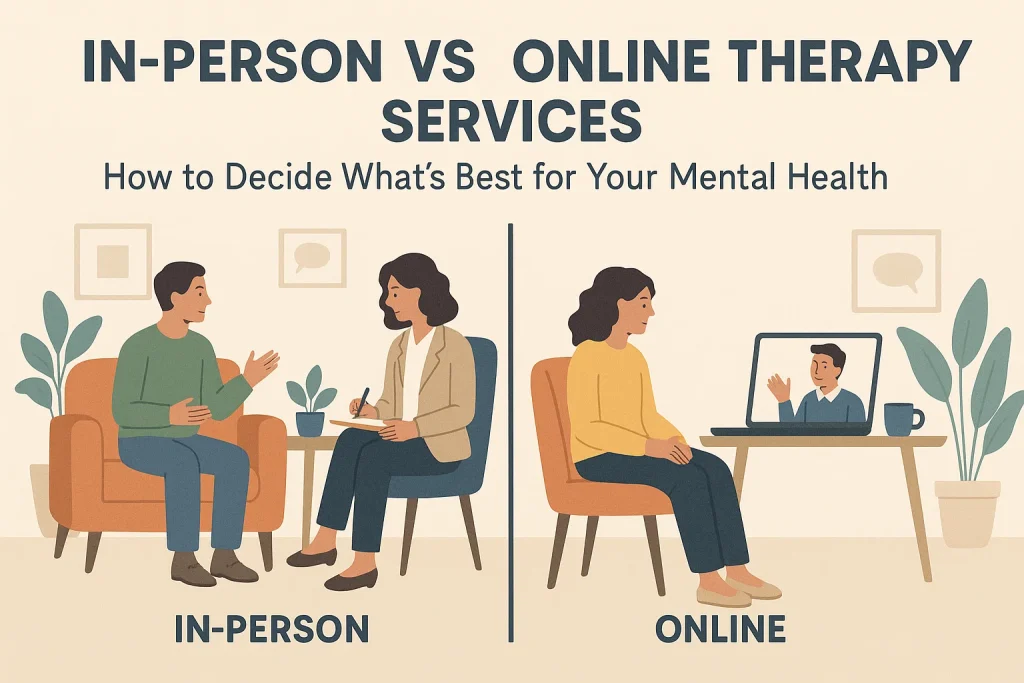
In-person vs online therapy has become a hot topic in 2025 as more people seek support for their mental well-being. With an explosion of telehealth options and traditional counseling adapting to a digital world, finding what truly fits your needs can feel overwhelming. Whether you crave a cozy office or the comfort of your own space, it’s time to compare, reflect, and make an empowered decision about your mental health journey!
Why Comparing Therapy Formats Matters in 2025
- Both in-person and online counseling offer proven results
- Your comfort and lifestyle matter more than ever
- Insurance coverage and costs are changing rapidly
- Finding the right therapist is easier—but can be confusing!
Therapy Services Explained
What is In-Person Therapy?
In-person therapy, sometimes called face-to-face counseling, means meeting a licensed therapist at their office. You sit together, share your thoughts, and build trust in a private setting. This classic approach can feel safe and familiar, and many people find the physical presence of a caring professional grounding. According to a 2024 Pew study, over 52% of American adults still prefer at least some sessions in-person—especially for severe anxiety, trauma, or when first starting out.
What is Online Therapy?
Online therapy connects you to a therapist using secure video calls, chat, or phone sessions. No commute, no waiting rooms, just real talk—wherever you feel comfortable! Platforms like BetterHelp and Talkspace have surged in popularity, with 2025 data showing over 40 million sessions completed monthly worldwide. For people in rural areas, those with busy schedules, or anyone who struggles with in-person social anxiety, virtual counseling can be a game-changer. Still, digital communication has pros and cons of its own.
Hybrid Therapy: The New Trend
Many clinics now offer a mix of in-person and online sessions—aka hybrid therapy. This approach gives you flexibility: see your counselor in person for the first visit, then switch to video calls as needed. According to the American Psychological Association, hybrid models have increased by 80% since 2023 and may soon become the norm. The real win? You can change formats as your needs and life circumstances shift.
Comparing Key Differences
Accessibility & Convenience
With online therapy, you can connect from anywhere—your bedroom, a quiet park, or even your car (hey, sometimes privacy is hard to find). This makes consistent sessions possible for people with busy jobs, parents of young kids, or anyone without easy access to a clinic. In-person therapy requires travel, which can be an obstacle, but some find the trip itself helps them mentally prepare.
- Online therapy platforms are available 24/7, including weekends
- In-person appointments often have limited hours (Mon–Fri, 9–6)
- Many clinics now have 2–3 week waitlists for new clients
Connection & Communication
For some, nothing replaces being physically present with another human. Facial expressions, body language, and subtle emotional cues are more obvious in person. On the other hand, video calls make it easier for people with social anxiety or disabilities to open up. Interestingly, a 2025 Harvard study found no significant difference in treatment outcomes between formats for mild-to-moderate depression—what matters most is the strength of the therapeutic relationship.
Privacy & Comfort
Online therapy means no running into neighbors in a waiting room and zero commute. But some worry about tech glitches or eavesdropping family members. In-person offices offer professional privacy but can feel intimidating for first-timers or those who value anonymity. Each comes with trade-offs, so think honestly about what feels safest for you.
| Aspect | In-Person Therapy | Online Therapy |
|---|---|---|
| Convenience | Travel required | Anywhere with Wi-Fi |
| Cost (avg/2025) | $120–$180/session | $60–$120/session |
| Wait time | 2–4 weeks | Instant to 1 week |
It’s smart to check your insurance—many plans now cover online therapy at the same rate as in-person, but this varies widely.
What’s Right for You?
Who Benefits Most from In-Person?
If you’re starting therapy for the first time, dealing with trauma, or struggle to connect online, face-to-face may offer a sense of safety. In-person is also recommended for severe conditions, medication management, or when non-verbal support is key. Some people just like having a scheduled “me-time” outside their home!
Who Thrives with Online Therapy?
If your schedule is wild, you have kids at home, or mobility is an issue, online sessions are a lifesaver. Also perfect for those living abroad, digital nomads, or anyone wanting to try therapy discreetly. Many people find it easier to open up about tough topics from their own space.
Switching Between Formats
Life changes fast—your needs might too! Don’t stress about “choosing wrong.” Many people start with one format, then switch as their situation shifts. Nearly 68% of users in a 2025 survey said they changed formats at least once in the past year. Flexibility is now the norm, not the exception.
Exploring Therapy Platforms
Major Online Therapy Providers
In 2025, the online therapy landscape is more crowded (and competitive) than ever. Platforms like BetterHelp, Talkspace, and Amwell dominate the market, offering licensed therapists, flexible scheduling, and even text-based support. Prices typically range from $60 to $120 per week, with some offering unlimited messaging. Many services now include specialized care for teens, couples, or LGBTQ+ clients, helping you find a perfect fit.
- BetterHelp: 48,000+ licensed counselors, $85–$120/week
- Talkspace: Video, chat, and psychiatry options, $69–$130/week
- Amwell: Insurance-friendly, $79–$110/session
Keep in mind: While many platforms boast huge therapist networks, the quality of the match is still what matters most. Look for user reviews, credentials, and specialties that match your needs.
What to Look For in a Therapist
Whether online or in-person, your relationship with your therapist is the biggest predictor of success. Look for:
- Licensed and credentialed professionals (LMFT, LCSW, PhD, PsyD, etc.)
- Experience with your concerns (anxiety, trauma, relationship issues, etc.)
- Approachable communication style—does it feel safe to be honest?
- Flexible scheduling and clear cancellation policy
Most platforms now allow you to switch therapists easily if it doesn’t “click”—don’t settle! As of 2025, nearly 30% of users switch therapists within the first month, and that’s totally normal.
Insurance, Costs, and Financial Support
The cost of therapy is still one of the biggest barriers for many. In 2025, more employers offer EAP programs that include free online sessions, and insurance companies are expanding telehealth coverage. For those paying out of pocket, sliding scale clinics or nonprofit organizations can reduce costs to $30–$60 per session. And remember, many online platforms offer first-week discounts or free trials. Keep your budget in mind but don’t compromise on quality!
| Platform | Session Price | Special Features |
|---|---|---|
| BetterHelp | $85–$120/week | Unlimited text, specialized counselors |
| Talkspace | $69–$130/week | Video, chat, psychiatry, couples therapy |
| In-Person (avg) | $120–$180/session | Traditional, local, physical presence |
Always check if your insurance covers virtual mental health care—it could save you hundreds per year. Don’t be shy to ask about “sliding scale” or financial aid!
Pro Tips for Choosing Your Format
- Test both in-person and online if you’re unsure
- Prioritize your sense of safety and comfort
- Ask about session flexibility and after-hours support
- Don’t ignore “bad vibes”—switch therapists if needed
- Your needs can and will change—stay open to trying new formats!
Personal Stories: Real Experiences
Switching to Online: My Honest Review
Last year, I switched from traditional office visits to online therapy because my work hours got unpredictable. At first, it felt awkward to open up via video call, but after a few sessions, I started to appreciate the convenience. No rushing across town or worrying about traffic! Honestly, it gave me space to process my emotions in my own time. (Shoutout to my therapist for being so understanding about the occasional cat appearance on Zoom.)
Returning to In-Person
After a few months, I missed the ritual of going somewhere just for myself. The act of physically showing up made me feel more committed, and I realized I was more focused during in-person sessions. Now I book in-person when I need a deeper reset, and keep online therapy as a backup. The mix keeps me balanced!
Hybrid Success
Many friends now blend both—doing in-person during tough times and online for regular check-ins. This flexibility is a game changer, especially for parents and caregivers. One friend says, “Therapy fits into my life, not the other way around.”
Frequently Asked Questions (FAQ)
Q1. Is online therapy as effective as in-person therapy?
Multiple studies show online therapy is equally effective for most mental health concerns, especially anxiety, mild depression, and stress management. Severe or complex cases may benefit from in-person support, but outcomes often depend more on therapist quality than format.
Q2. How much does online therapy cost in 2025?
Online therapy costs $60–$120 per week on most platforms. Many providers offer sliding scale rates or free initial sessions, and some insurance plans now cover telehealth services.
Q3. Can I switch between online and in-person therapy?
Yes, most therapists now offer hybrid care, so you can change formats as your needs or life situation change.
Q4. Are my sessions private and secure?
Reputable platforms use encrypted, HIPAA-compliant systems. In-person sessions are private, but ensure your home environment is confidential for online meetings.
Q5. How do I find the right therapist for me?
Look for credentials, experience with your issues, and a communication style that makes you feel safe. Many platforms let you change therapists easily if it’s not a good fit.
Q6. Does insurance cover therapy?
Many insurance plans now cover both online and in-person therapy, but coverage varies widely. Always check with your provider first.
Q7. What if I don’t feel comfortable with my therapist?
It’s normal! Many people switch therapists before finding the right fit. Trust your instincts and try a new professional if you feel uncomfortable.
Q8. What types of therapy can I get online?
Most therapy types are available online: CBT, DBT, trauma therapy, couples therapy, and more. However, some specialized treatments or testing may require in-person visits.
Q9. Is therapy confidential?
Yes, therapists are bound by law to keep sessions confidential except in cases of danger to self/others or court orders.
Q10. Can I do therapy from anywhere?
Online therapy allows you to connect from anywhere with internet. Some providers may require you to be physically in the state where your therapist is licensed.
Q11. Are there any age restrictions for online therapy?
Many platforms offer teen counseling with parental consent. Adults (18+) can generally sign up on their own.
Q12. What devices do I need for online sessions?
A smartphone, tablet, or computer with internet access and a camera/mic is usually enough.
Q13. What happens if my internet fails during a session?
Most therapists will try to reconnect or finish the session by phone. Check the platform’s policy beforehand.
Q14. Is online therapy suitable for crisis situations?
Online therapy is not appropriate for emergencies. In crisis, contact a local helpline or emergency service immediately.
Q15. How often should I attend therapy?
Weekly sessions are typical, but frequency depends on your needs and goals. Discuss this openly with your therapist.
Q16. What if I need medication?
Some online platforms offer psychiatric consultations, but you may need an in-person visit for prescriptions, especially for controlled substances.
Q17. Is online therapy covered by Medicaid/Medicare?
Certain platforms and therapists accept these plans, but coverage varies by state and provider.
Q18. What should I prepare for my first session?
Write down your main concerns, goals, and any questions. Have a quiet, private space for online sessions.
Q19. Can I get couples or family therapy online?
Yes, many therapists specialize in virtual couples and family counseling with great results.
Q20. Is there a difference in therapeutic approaches?
Most evidence-based approaches (CBT, mindfulness, etc.) work well both in-person and online. Somatic or art therapy may require in-person elements.
Q21. Can I remain anonymous during therapy?
Some platforms allow anonymous chats or calls, but most require at least basic identity verification for your safety.
Q22. What qualifications do online therapists have?
Licensed therapists must meet the same standards as in-person clinicians. Always verify credentials on the platform.
Q23. What if I move to another state?
Licensing rules vary. Some therapists can see you across state lines, others can’t. Always ask about interstate care policies.
Q24. How do I know if therapy is working?
You should notice gradual improvement in mood, coping, or daily life. If not, discuss adjustments with your therapist.
Q25. Can I pause or stop therapy?
Yes, you’re in control of your schedule. It’s normal to take breaks or end therapy as your needs evolve.
Q26. Are group therapy or support groups available online?
Yes, many platforms and nonprofits offer virtual group sessions on specific issues like grief or addiction.
Q27. What are the signs I need therapy?
Persistent sadness, anxiety, trouble functioning, or feeling “stuck” are all good reasons to seek support.
Q28. How do I avoid therapy scams?
Choose reputable, well-reviewed platforms. Verify therapist licenses. Never pay large fees upfront or share sensitive info outside the platform.
Q29. How do I give feedback about my therapist?
Most platforms have feedback or review options. Open communication helps improve care for everyone.
Q30. Can I do therapy with a friend or family member present?
With your therapist’s agreement, yes—especially for family sessions. For individual therapy, privacy is usually best for progress.
공식 자료와 확인처
- 금융감독원 fss.or.kr
- 손해보험협회 공시실 knia.or.kr
- 생명보험협회 공시실 klia.or.kr
보장 내용은 상품과 가입 시점의 약관에 따라 달라집니다. 실제 조건은 가입하신 보험사의 약관 원문에서 확인하세요.
Counseling 관련해 이어서 볼 글
- Therapy Services for Adults with ADHD2025.07.30
- How to Choose the Best Therapy Services Near You (With Real Reviews)2025.07.22
- Affordable Counseling Services for Families2025.07.30
- Feeling Burnt Out? Here’s Why Searching ‘Therapist Near Me’ Can Change Your Life2025.07.29
- 직장인 스트레스 심리상담, 얼마나 도움될까? — 내용 삭제 및 통합 안내2026.10.04
- Affordable Family Counseling Services in Howell, MI2025.07.18
응급하거나 자해·타해 위험이 있는 경우 즉시 119 또는 가까운 응급의료기관에 도움을 요청하세요. 제도와 지침은 변경될 수 있으므로 관계기관의 최신 안내를 함께 확인하시기 바랍니다.