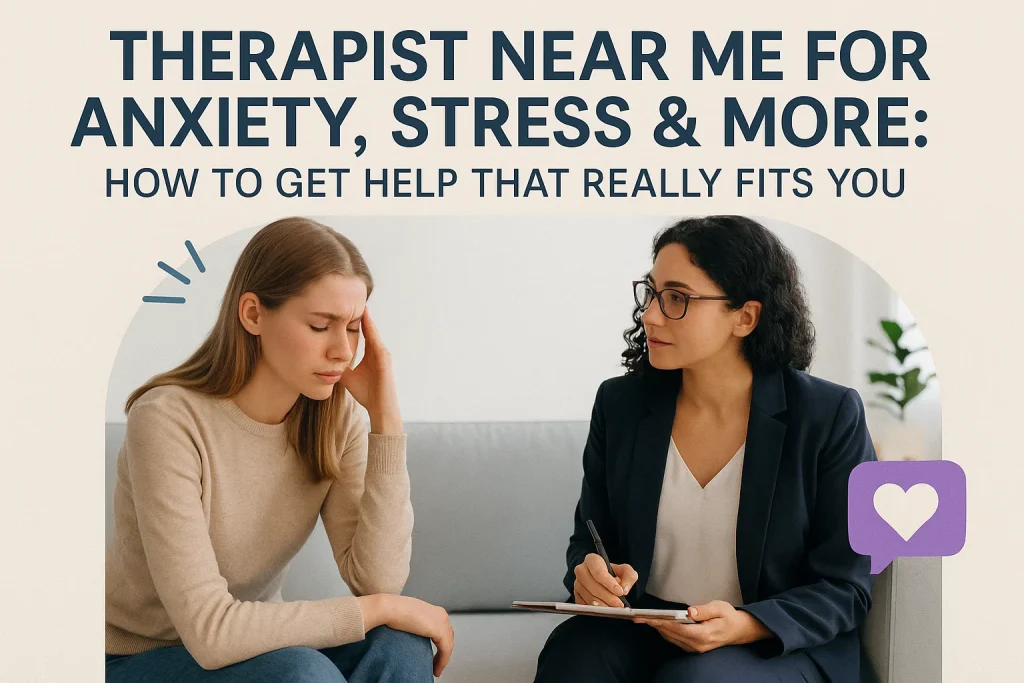
Therapist near me is one of the top-searched phrases in 2025, and for a good reason: modern life is overwhelming. From work deadlines to personal relationships, anxiety and stress can build up, sometimes to a level where you feel totally lost or “not yourself.” If you’re searching for a counselor, psychologist, or therapist who really gets what you’re going through, you’re not alone. In this guide, you’ll find practical advice, expert tips, and real-life comparisons to help you connect with the right mental health professional—no matter your situation or location.
Finding a Therapist That Fits in 2025
- Local options, online therapy, and hybrid models are more accessible than ever.
- Personal fit matters more than ever—credentials + chemistry = success.
- Understanding insurance, fees, and evidence-based approaches saves money and time.
Why Anxiety and Stress Need Real Attention
Anxiety and stress aren’t just “bad moods”—they’re real health issues. Over 40% of adults reported high stress in 2024, and the number continues to grow, especially among Gen Z and millennials. Ignoring the signs can lead to chronic fatigue, sleep problems, headaches, and even heart risks. The real talk? Most people wait 10 years before getting professional help for anxiety, but early support can make all the difference.
Recognizing the Signs
Are you experiencing racing thoughts, trouble sleeping, or physical symptoms like tense muscles? You’re not just “overthinking.” These are red flags that your brain and body need support. Research shows that people who seek therapy early have a 60% higher rate of symptom improvement within 6 months, compared to those who wait. Don’t let the “I’ll handle it myself” mindset block your healing.
The Impact on Daily Life
Chronic stress can hit you like a tidal wave: decreased work performance, social withdrawal, irritability, and constant worry. Left unchecked, it can lead to burnout or depression. The latest CDC stats show anxiety disorders are now the most common mental health condition in the US, affecting 1 in 5 adults. You deserve real tools and support—not just “positive vibes.”
What Therapy Actually Does
Seeing a therapist isn’t about “fixing” you—it’s about giving you the space to process, heal, and learn proven skills. Therapy can teach you new ways to cope with triggers, change negative thought patterns, and build resilience. Cognitive Behavioral Therapy (CBT), mindfulness-based therapy, and EMDR are just a few evidence-based approaches for anxiety and stress, all with strong scientific backing.
Types of Therapists Near You
When searching for a therapist near me, you’ll see lots of options: counselors, psychologists, psychiatrists, and even online therapy platforms. Each has its own style, training, and vibe. Finding your “fit” is more important than picking the most expensive or highly rated name.
Licensed Professional Counselor (LPC)
LPCs are trained for talk therapy and can help with everything from daily stress to trauma recovery. Sessions average $75–$150, depending on location. They often focus on practical strategies, making them a great choice for people wanting actionable steps.
Clinical Psychologist
Psychologists (PhD or PsyD) provide therapy and in-depth assessments. They use advanced methods for anxiety, stress, and complex diagnoses. Average session costs range from $125–$250. If you need testing for ADHD, learning differences, or deeper insight, this is your go-to.
Psychiatrist
Psychiatrists are MDs who can prescribe medication if needed. While many focus on meds, some offer talk therapy as well. Initial evaluations are pricier (usually $250–$400), but check if your insurance covers part of the visit. If your anxiety comes with sleep or mood issues, consider starting here for a full health check.
| Type | What They Offer | Average Fee |
|---|---|---|
| LPC | Talk therapy, coping strategies | $75–$150/session |
| Psychologist | Therapy, assessments | $125–$250/session |
| Psychiatrist | Medication, medical diagnosis | $250–$400/initial |
It’s normal to feel overwhelmed by the options. A quick pro tip: Start with what feels manageable, whether that’s a free consult call or an online platform with flexible hours.
In-Person vs. Online Therapy
“Should I meet my therapist in person or try online?” Both options are valid! Online therapy grew by over 35% in 2024 alone. Many people find it more comfortable, less stressful, and even cheaper. In-person sessions may work better if you want deep connection, body language cues, or a physical safe space. It’s all about your comfort zone.
Online Therapy Pros & Cons
Online therapy services like BetterHelp, Talkspace, and Cerebral offer video, phone, and text sessions. Prices start at $65/week. Convenience, privacy, and access to diverse therapists are big wins. However, some people miss face-to-face connection or struggle with tech.
In-Person Therapy Pros & Cons
Seeing a therapist in person can boost trust and connection. Local therapists may also know your community resources or culture better. But, in-person sessions can cost more, require travel, and may have longer wait times (2–6 weeks on average in big cities).
Hybrid and Flexible Models
Many clinics now offer hybrid care—mixing in-person and online sessions. This flexibility means you can keep progress going even when life gets busy. Always ask about hybrid options when you reach out to new therapists!
How to Choose the Right Therapist for You
Choosing a therapist isn’t about finding “the best” expert, but about finding your best fit. Chemistry, comfort, and feeling heard are proven predictors of success. Research from 2024 shows that clients who feel emotionally safe with their therapist have a 72% higher satisfaction rate.
Credentials and Experience
Look for clear credentials: state licenses, advanced degrees, and ongoing education. Therapists specializing in anxiety and stress often have CBT or mindfulness training—ask about this up front. Don’t hesitate to ask, “What experience do you have with clients like me?”
Cultural Fit & Personal Preferences
Feeling seen and understood is vital. If you need someone who respects your identity, language, or background, search for therapists listing those specialties. Most platforms allow you to filter by gender, ethnicity, or approach. Don’t settle—your comfort matters!
Practical Steps to Take
- Check insurance coverage and out-of-pocket costs
- Book a free intro call or “consultation” session
- Prepare 1–2 questions about their style (e.g., “How do you approach anxiety?”)
- Notice your gut feeling during the first session—comfort > credentials!
Therapy Methods & Success Stories
So, you’ve found a therapist near me—what comes next? Understanding the types of therapy and real-life experiences can ease your anxiety about starting the journey. In 2025, there are more evidence-based approaches than ever, each with its own strengths. And yes, therapy works! Studies show 78% of clients see improvement within 10–12 sessions when they find the right fit.
Cognitive Behavioral Therapy (CBT)
CBT is the gold standard for anxiety and stress. It focuses on identifying negative thought patterns and replacing them with healthier, more realistic ones. Sessions are usually structured and goal-oriented. The best part? CBT is often short-term—average clients see results in 8–16 weeks, making it ideal for those who want actionable change.
Mindfulness-Based Therapy
This approach blends talk therapy with mindfulness skills—think deep breathing, present-moment awareness, and body scanning. Mindfulness-based therapies are especially effective for stress and panic attacks. Research from 2025 shows a 65% reduction in daily anxiety for regular participants. Bonus: Many therapists now offer guided meditation recordings to use between sessions.
EMDR & Trauma-Informed Therapy
If your anxiety is linked to past trauma, EMDR (Eye Movement Desensitization and Reprocessing) might help. It’s a structured method designed to reduce the emotional impact of distressing memories. Trauma-informed therapists focus on creating a safe, supportive space without judgment. In one major study, 83% of trauma survivors reported better emotional stability after just 6 EMDR sessions.
| Therapy Type | Main Focus | Average Duration |
|---|---|---|
| CBT | Thought patterns, behavior change | 8–16 weeks |
| Mindfulness-Based | Present moment, stress reduction | 10–20 weeks |
| EMDR | Trauma healing | 6–12 sessions |
No one approach is “better”—the key is what feels right for you. Many therapists even combine these methods for a customized plan.
Real Stories: How Therapy Changed Lives
- “Therapy helped me sleep better and finally enjoy weekends again.” – Jess, 34
- “After years of panic attacks, EMDR helped me find peace.” – Mark, 41
- “Online therapy fit my busy schedule—no more excuses!” – Alex, 29
Paying for Therapy: What You Need to Know
Cost is one of the top reasons people delay therapy. The good news? There are more affordable options than ever in 2025. Many insurance plans cover mental health care, and there’s a growing list of sliding-scale, community, and online therapy services.
Insurance & Out-of-Pocket Costs
Most major insurance plans (including Medicaid and ACA exchanges) now cover therapy. Copays usually range from $20–$50 per session. Without insurance, online therapy starts as low as $65/week, and in-person can range from $75–$200/session. Many therapists offer “sliding scale” fees based on your income—always ask!
Free and Low-Cost Options
- Community mental health clinics
- University counseling centers
- Nonprofit hotlines (e.g., NAMI, Crisis Text Line)
- Employee Assistance Programs (EAP)
Even a single session or support group can make a big difference. There’s zero shame in asking for help, no matter your budget!
Using Technology to Save Money
Teletherapy and therapy apps have made mental health care more accessible. Popular options like BetterHelp, Talkspace, and Cerebral offer flexible plans and often free trial periods. Newer platforms may even include text or group sessions as part of their base fee. In a 2025 consumer survey, 72% of users said tech-based therapy made starting help less intimidating.
Making Your First Appointment
Ready to take the leap? Here’s how to get started without the stress:
- List your top needs (e.g., anxiety, sleep, relationship stress)
- Search “therapist near me” or use a platform to match with specialists
- Reach out by phone or secure email (most therapists respond within 48 hours)
- Ask about insurance, session format, and free consultation calls
- Remember: It’s normal to “shop around” for the right fit—don’t give up after one try!
Give yourself some credit: Reaching out is often the hardest step. But it’s also the first step toward real change.
FAQ: Therapist Near Me, Anxiety, Stress & More
Q1. What types of therapists can help with anxiety?
Licensed counselors, psychologists, and psychiatrists all treat anxiety using proven methods like CBT and mindfulness. Some may also prescribe medication if needed.
Q2. How do I know if a therapist is legit?
Check for state licenses, advanced degrees, and clear online reviews. Most professionals list credentials on their website or directory profiles.
Q3. Is online therapy as effective as in-person?
Yes! Studies in 2025 show online therapy is just as effective for anxiety and stress, with added convenience for many people.
Q4. What should I expect at my first therapy session?
You’ll share your reasons for seeking help, discuss goals, and ask questions. There’s no pressure—think of it as a “getting to know you” meeting.
Q5. How do I choose the right therapist near me?
Look for someone with experience in your concerns, check for credentials, and trust your gut after the first meeting.
Q6. What’s the average cost of therapy in 2025?
In-person sessions average $100–$200; online therapy starts at $65/week. Sliding scale and insurance options are available.
Q7. Can I get therapy without insurance?
Yes. Many therapists offer reduced rates or sliding scale, and community clinics provide low-cost care regardless of insurance.
Q8. How soon will I feel better after starting therapy?
Most people notice improvement after 3–5 sessions, but real change often happens around 8–12 sessions.
Q9. Is it normal to feel nervous about starting therapy?
Absolutely! Feeling anxious is common, but most people feel relief and hope after the first session.
Q10. Do therapists keep my information confidential?
Yes. Therapists follow strict privacy laws—your information stays private except in emergencies.
Q11. What if I don’t “click” with my therapist?
It’s OK to switch! The best results come when you feel comfortable and understood. Don’t be afraid to try another therapist.
Q12. Will I have to take medication?
Not necessarily. Most anxiety and stress are treated with therapy first; medication is only recommended if you and your provider agree it’s helpful.
Q13. Can therapy help with work stress?
Yes, therapists often help clients manage workplace anxiety, improve communication, and prevent burnout.
Q14. What is CBT?
Cognitive Behavioral Therapy (CBT) is a goal-oriented approach proven to reduce anxiety and stress by changing negative thinking patterns.
Q15. Is group therapy helpful for anxiety?
Group therapy offers support, shared experiences, and new perspectives. Many people find it empowering and less isolating.
Q16. What if I can’t afford therapy?
Check community clinics, nonprofits, and sliding scale therapists. Some online platforms offer free trial sessions or group options.
Q17. Can I see a therapist for just a few sessions?
Absolutely! Many clients benefit from short-term therapy for specific issues or life transitions.
Q18. How do I find a culturally sensitive therapist?
Use therapist directories with identity filters, and ask about cultural competence during your first call or email.
Q19. What’s the difference between a counselor, psychologist, and psychiatrist?
Counselors and psychologists provide talk therapy. Psychiatrists are medical doctors who can prescribe medication.
Q20. Will insurance cover online therapy?
Most major insurers now cover online therapy, but check your plan for details and copay amounts.
Q21. Is therapy confidential for teens?
Yes, but therapists may involve parents if safety is at risk. Teens can usually speak privately with their therapist.
Q22. How do I know if I need therapy or just a break?
If stress or anxiety disrupts daily life or lasts more than two weeks, professional help is a smart move.
Q23. Can I get therapy for free?
Some nonprofits, hotlines, and crisis centers offer free support. University counseling centers may also provide sessions at no cost.
Q24. What if I have social anxiety about therapy itself?
Tell your therapist! They’re used to it and will help you feel more comfortable, step by step.
Q25. Are there therapists who specialize in my situation?
Yes, therapists often list specialties like trauma, grief, LGBTQ+, or parenting. Use directory filters to find your match.
Q26. Can therapy help with panic attacks?
Definitely! Therapists teach coping tools and strategies that reduce both the frequency and intensity of panic attacks.
Q27. How often should I go to therapy?
Most start with weekly sessions, then move to biweekly or monthly as progress is made.
Q28. What if I need immediate help?
If you’re in crisis, call a hotline or text line (e.g., 988 in the US) or visit your nearest ER. Immediate support is available 24/7.
Q29. Can therapy help with physical symptoms of anxiety?
Yes! Therapy addresses both mind and body, including sleep problems, muscle tension, and headaches.
Q30. How do I keep progress going outside therapy?
Many therapists suggest journaling, mindfulness apps, or support groups. The real magic happens when you practice skills in daily life!
공식 자료와 확인처
- 금융감독원 fss.or.kr
- 손해보험협회 공시실 knia.or.kr
- 생명보험협회 공시실 klia.or.kr
보장 내용은 상품과 가입 시점의 약관에 따라 달라집니다. 실제 조건은 가입하신 보험사의 약관 원문에서 확인하세요.
Counseling 관련해 이어서 볼 글
- How to Find a Therapist Near Me: A Real Guide2025.07.31
- How to Find the Right Therapist for You: A Trustworthy Guide2025.07.19
- Find a Therapist Near Me: Quick & Trusted Therapy Services for Busy Lives2025.07.21
- Reasons You Should Try Therapy Services2026.09.18
- 가족 문제로 심리상담 받아도 효과 있나요?2025.07.02
- 고등학생 진로 고민 심리상담 실제 사례2025.07.16
응급하거나 자해·타해 위험이 있는 경우 즉시 119 또는 가까운 응급의료기관에 도움을 요청하세요. 제도와 지침은 변경될 수 있으므로 관계기관의 최신 안내를 함께 확인하시기 바랍니다.